
How to Protect Your Data After a Major App Breach
Understanding What Happens During a Major App Breach
A major app breach is more than just a news headline—it’s a serious threat to your personal data security. When a breach occurs, cybercriminals gain unauthorized access to sensitive information such as email addresses, passwords, phone numbers, and sometimes even financial details. This type of exposure can quickly escalate into larger problems, especially if your data is shared or sold online. In today’s digital environment, data breaches happen frequently, making it essential for users to understand the risks and take immediate action.
Once your data is compromised, it doesn’t just disappear into thin air. Hackers often use stolen information for activities like identity theft, account takeovers, or large-scale automated login attempts. If you’ve ever reused the same password across multiple platforms, the risk becomes even greater. One breached account can open the door to many others, creating a chain reaction that puts your entire digital presence at risk. That’s why understanding how breaches work is the first step toward protecting yourself effectively.
Immediate Steps to Protect Your Data After a Breach
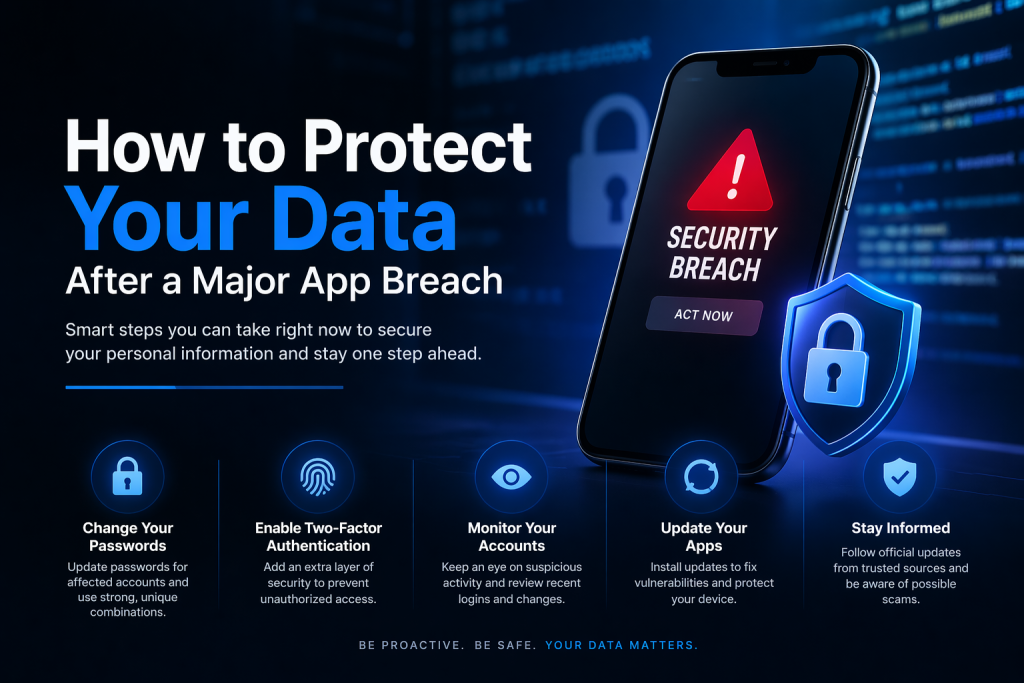
When you discover a data breach, your response time matters more than anything else. Acting quickly can prevent further damage and reduce the risk of your accounts being compromised. The first thing you should do is update your passwords immediately, especially for the affected application. If you’ve used the same or similar passwords elsewhere, make sure to change those too. This simple step can significantly reduce the chances of unauthorized access spreading across your accounts.
Another crucial action is enabling two-factor authentication (2FA) on all your important accounts. This feature adds an extra layer of security by requiring a second verification step, such as a code sent to your phone. Even if someone manages to get your password, they won’t be able to access your account without this second factor. It’s one of the most effective ways to strengthen your defenses after a breach and should be considered a standard practice for anyone concerned about data protection.
Strengthening Your Password Strategy for Maximum Security
After experiencing a major app breach, it’s time to rethink how you manage your passwords. Many people rely on simple or repeated passwords because they’re easy to remember, but this habit creates a significant vulnerability. Cybercriminals often use automated tools to test stolen credentials across multiple platforms, meaning a single weak password can compromise several accounts at once. This is why building a strong password strategy is essential for long-term security.
To improve your protection, focus on creating unique and complex passwords for every account you use. A strong password should include a mix of uppercase and lowercase letters, numbers, and special characters. Even better, consider using passphrases that are longer and harder to guess but still easy for you to remember. By treating each password as a unique key, you reduce the chances of a widespread compromise and make it much harder for attackers to succeed.
Monitoring Your Accounts for Suspicious Activity
Protecting your data doesn’t stop after changing passwords. A data breach can have lasting effects, which means ongoing monitoring is essential. You should regularly check your accounts for unusual activity, such as unexpected login alerts, unfamiliar devices accessing your account, or changes you didn’t authorize. These signs can indicate that someone is attempting to use your stolen data.
In addition to manual checks, you can rely on security tools that notify you when your information appears in leaked databases. These tools help you stay informed and take action before the situation worsens. Being proactive about monitoring allows you to catch potential threats early, giving you a better chance of preventing serious consequences like identity theft or financial loss.
Securing Your Financial and Personal Information
One of the biggest concerns after a major app breach is the safety of your financial information. If your payment details or banking credentials are exposed, the risk of fraud increases significantly. That’s why it’s important to review your financial accounts regularly and report any suspicious transactions immediately. Many banks offer real-time alerts, which can help you respond quickly to potential threats.
Your personal identity is equally valuable and must be protected. Cybercriminals can use stolen data to impersonate you, create fake accounts, or launch scams targeting others. To minimize these risks, avoid sharing sensitive information unnecessarily and stay cautious when responding to emails or messages that request personal details. Staying aware and informed is your best defense against identity-related threats.
Long-Term Data Protection Strategies After a Breach
Recovering from a data breach is not just about immediate fixes—it requires a long-term approach to cybersecurity. One effective strategy is using a password manager to securely store and generate strong passwords for all your accounts. This tool helps eliminate the need to remember multiple complex passwords while ensuring each one is unique and secure.
Another important step is adopting modern security practices, such as biometric authentication or passkeys, which reduce reliance on traditional passwords. These technologies offer enhanced protection and make it harder for attackers to gain access to your accounts. At the same time, developing consistent cybersecurity habits—like updating software regularly and staying informed about potential threats—will help you maintain a strong defense over time.
Conclusion
A major app breach can disrupt your digital life, but it also serves as a wake-up call to strengthen your security practices. By acting quickly, improving your password strategy, monitoring your accounts, and adopting long-term protection measures, you can significantly reduce your risk. Cybersecurity is not a one-time effort—it’s an ongoing process that requires attention and awareness. The more proactive you are, the better prepared you’ll be to protect your data in the future.
FAQs
1. What is the first step after a data breach?
The first step is to change your passwords immediately, especially for affected accounts and any reused credentials.
2. Why is two-factor authentication important?
It adds an extra layer of security, making it harder for attackers to access your account even if they have your password.
3. How can I tell if my account has been compromised?
Look for unusual activity such as unknown logins, password reset requests, or changes you didn’t make.
4. Should I worry about my financial information?
Yes, always monitor your financial accounts and report suspicious transactions as soon as possible.
5. What is the best long-term protection strategy?
Use strong, unique passwords, enable security features, and stay informed about cybersecurity threats.
Read more